Most of Peachtree Corners was planned before it was built. Technology Park came first, on plans Paul Duke started in 1967. The planned neighborhoods arrived about a decade later, beginning with Spalding Corners and Peachtree Station, and single-family streets with swim-and-tennis communities in the mix went on to fill the city's north side toward the Chattahoochee. The 2020 census counted more residents here than in any other city in Gwinnett County, and the Census Bureau dates about four in ten of the city's homes to the 1980s alone. Interior painting here is rarely about fresh drywall. It is about rooms lived in for thirty or forty years: trim under old enamel, wallpaper somebody meant to strip, and colors picked under trees that were smaller when the house was new.
What the 1980s left behind
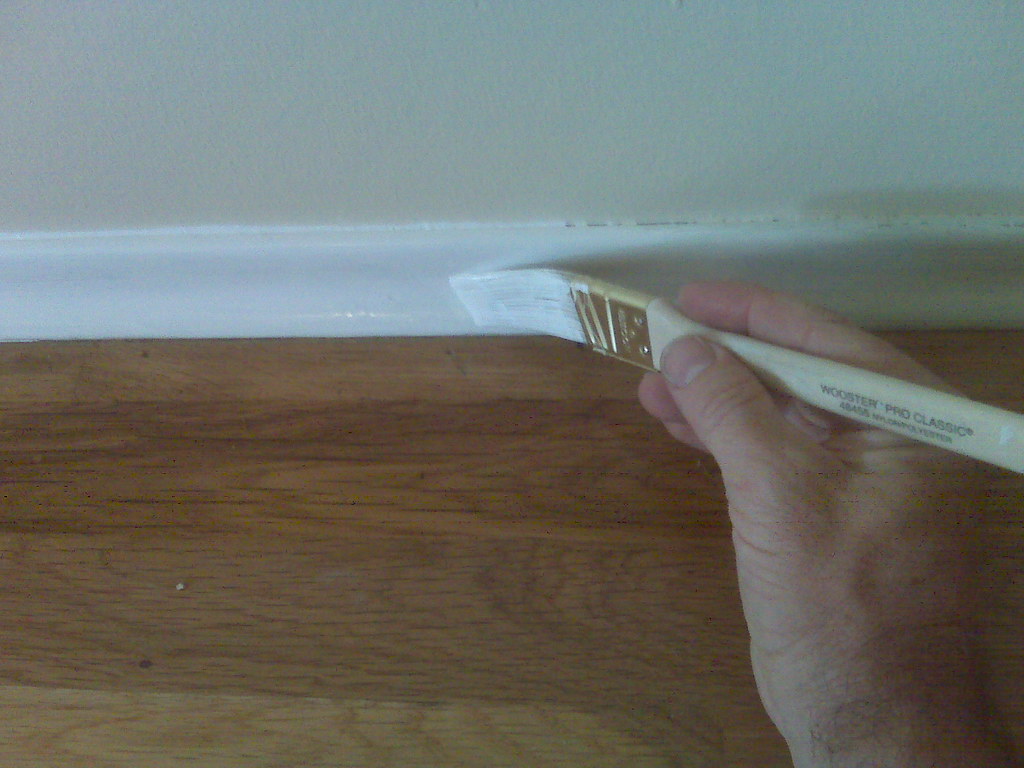
Houses finished in those years share a few habits, and the walk-through checks for each. Doors, casings and baseboards were often brushed with oil-based enamel, and latex rolled straight over it lets go in strips, so one casing gets a quick solvent test, and glossy oil trim is scuffed and given a bonding primer. Where a dining room carries chair rail and crown, that woodwork wants a steady brush. Kitchens and powder rooms may still hold wallpaper, or the ridge of a border painted over instead of pulled, and those walls need stripping and a skim coat before a new color will lie flat. Each is listed separately in the quote, with the trim and door work priced apart from the walls.
Color under the canopy
Peachtree Corners is a Tree City USA community, and the shade of its big hardwoods reaches indoors. A family room facing a wooded backyard gets light filtered green through the leaves from spring into fall and a flatter, grayer light in winter, and a cool gray that looked crisp on the store's chip can go murky there. Warm whites and lighter mid-tones usually keep their character in shade, and a deep color can still work when it is chosen for the dim room rather than the bright sample. Two large swatches on the actual wall, checked at breakfast and again near dusk, settle it; the color consultation page describes that test.
Height and woodwork near the river
Much of the city's executive housing went up close to the Chattahoochee, where Jones Bridge Park and Simpsonwood Park now front the river, and a house built for that buyer tends to bring more height and more woodwork to a repaint. Where a foyer or family room rises two stories, the tall wall is worked from planks or a scaffold, never from a ladder propped on a landing, and the edge against the ceiling is cut in with a brush. The stair rail and balusters are protected or refinished during the same job, and built-in bookcases or a paneled study are quoted as separate items. The ceilings and two-story foyers page goes into the tall work.
Townhomes, condos and rentals
The Town Center beside Peachtree Parkway brought townhomes along with the Town Green that opened in 2019. The city's 2045 comprehensive plan steers townhomes and condominiums toward its main corridors, for owners ready to trade a yard for less upkeep without moving away, and the Census Bureau counts close to half of the city's households as renters. A townhome repaint runs vertically: a stair hall climbing two or three floors, landings nicked by every sofa carried up them, and narrow rooms where a shade too dark closes the walls in. An owner who rents out a condo or a townhome needs the reset between tenants instead, booked for the days the unit sits empty and done in one neutral so later touch-ups blend. The rental turnover page covers that scope.
Home offices and muggy summers
In a city built around a technology park, about one working resident in five works from home, more than across Gwinnett as a whole. The office can be painted first and handed back by evening, and the wall behind the desk deserves its own decision: a soft mid-tone in a matte finish sits more kindly on camera than a glaring bright white. Weather sets the rest of the calendar. Georgia summers run long and muggy, and latex gives up its water slowly in that air, so in July the air conditioning stays on, freshly enameled doors stand open until they firm up rather than sticking to their stops, and a newly painted bathroom gets a few days off from hot showers so the walls do not weep tan streaks.
One call, one walk-through
Phone the number or use the form, give the street and a line about what needs paint, and a callback follows to pick a day for the visit. The walk-through settles scope one room at a time: which trim is oil, which walls want patching, which ceiling is textured, where the light lands and at what hour. A written quote comes afterward, listing the paint, sheen, coats, prep and days, and the visit and the quote are both free. Houses built before 1978 get one more question on that first call: the build year.